Alex Poppe: My father, a WWII refugee, would no longer recognize our country

Dad told me: “They would aim the weapon at one of us, but not fire it. They seemed to have fun with it. I thought for sure I was going to die that day.” He was only 12. I heard his words again when I read about federal immigration agents descending from a Black Hawk helicopter, breaking down doors, and zip-tying U.S. citizens and immigrants in Chicago’s South Shore neighborhood last September.

His Bed

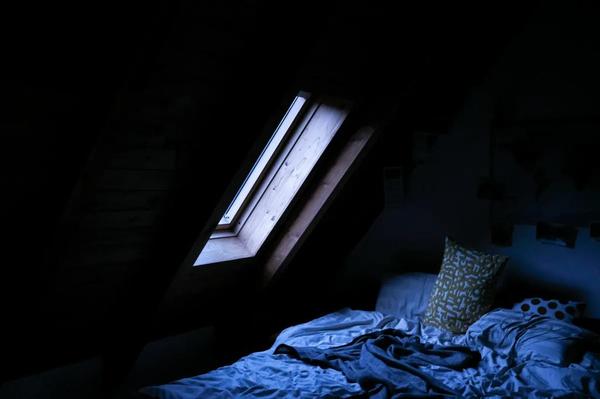
“We’ve always had this undeniable attraction to each other,” Vini says, his voice wispy from a lack of sleep. Outside the bedroom window, morning milks the sky, heralding my hangover.

Vini and I first met when I told him off for grabbing my butt in a bar Chris Farley made famous with his belly-flop naked beer slides. It was November 1988. I was a naïve, twenty-one-year-old business undergrad, too afraid to chase an artistic life. Vini was a twenty-three-year-old English grad...

What We Owe to Those Who Save Yet Harm Us: An Interview with Tim Hillegonds

Interviewed by Alex Poppe

A phoenix burns itself into ashes upon its death and is reborn from those same ashes. The same is true for Tim Hillegonds, the author of the hauntingly uplifting new memoir And You Will Call It Fate, published by the University of Nebraska Press on March 3, 2026. The reader accompanies Tim on his journey from high school dropout, struggling addict, and estranged father to sober, accomplished writer. Along the way, Hillegonds challenges the reader to contemplate grati...

The Uncounted Cost for America of Waging War on Iran

You watch from your 7th floor window as red tracers blush a night sky. A drone intercepts, your windows rattle, and bomb debris nosedives through funnels of black smoke. Red-orange flames lick at the edges of buildings.

You look around your home, debating “if” or “when.” Your government has finally issued evacuation orders, but the surrounding countries have closed their air space to commercial travel. You are going to have to find a bus or a taxi willi...

Tiny Love Stories: ‘He Insisted on Keeping Things Casual ’

"A Lifeline During Wartime"
Multiple civilian deaths from Russian airstrikes. I WhatsApped Kostya in Ukraine. “We’re fine,” he writes, his standard reply. Then, “How are you?” and “Mom says hi.” Back when he and I were “we,” I didn’t always get a response. When we broke, he ghosted hard. I left Ukraine never knowing why. Our reconnection — a byproduct of war. For 1,280 days, we’ve been in considerate contact. When fighting’s fierce, he writes so I know he’s alive. He sends jokes, compliments, new schemes to meet after the war. Peace talks falter. Battles rage. I eye my phone, wary of WhatsApp silence.
The Evils of MAGA’s “Moral Distance” — What we Can Learn from Iraq and Sweden

Sahar first told me about moral distance one May morning on a beach in Cadiz. Born in Baghdad, Sahar fled her country during the Gulf War, smuggling herself first to Syria before she made her way to Sweden, where she became a mental health counselor. I was living in northern Iraq, where I had unknowingly taught alongside one of Sweden’s most notorious sex offenders. As for Sahar, studying flamenco had drawn us both to Cadiz, where Sahar danced it, and I w...

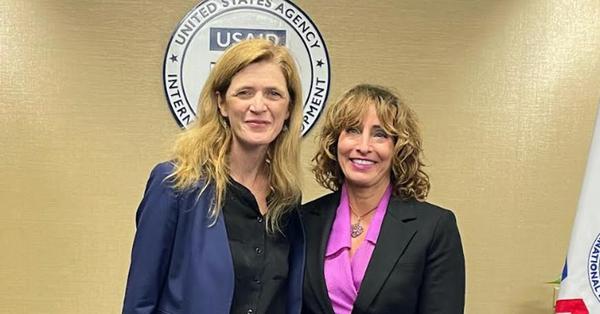
I Am A USAID Worker Who Lost My Job. Here's What Trump And Musk Aren't Telling You About The Cuts.

By eviscerating USAID, Trump and Elon Musk are redefining what it means to be American. Musk thinks empathy is ruining Western civilization. We need to ask ourselves if we want to be seen as small-hearted or generous. Do we want to be known as a nation that cares about those in need? A nation that does the right thing because it is the right thing? Or do we want to be known as a transactional country, willing to betray our long-standing allies, inflict intense suffering on the world’s most vulnerable, and embrace those who trample human rights? Who are we as Americans?

The 12-Year Old Decision that Now Haunts Me - Jaded Ibis Press

They were to write about their career aspirations. Scrawly English words rioted across a sheet of A4 paper. The paper belonged to Adnan*, a twelve-year-old Palestinian boy, a student in my English as a Foreign Language (EFL) class. The class was part of a US State Department-funded education program to thwart budding radicalism in East Jerusalem in 2012. Adnan wrote that he
wanted to become a suicide bomber.

I sat at the kitchen table inside the apartment I rented from the...

Room 308

Pushcart Prize nominee, short fiction

Sunlight streaked through the orange-red leaves, illuminating the dust motes hiding in the pale air. Bridget, the student nursing aide supervisor,
was helping a chubby toddler feed the ducks in the artificial lake at the center of the grounds. Her gentle cooing skimmed over grass blades and floated up to the window, where I stood. My forehead was slick with a
layer of oil. My scrub top was crusty with dried oatmeal, and my pockets were bloated with wadded Kleenex. Visitors’ Day was winding down. On Visitors’ Day, we got a lot of extended family and clergy and shiny people
who came because the other people who came were shiny and felt guilty, and no one was too ashamed to cry big tears, and stay for a few hours to feel good about themselves and the time they had just put in, and they
needed extra Kleenex from the student nursing aides who were always there.